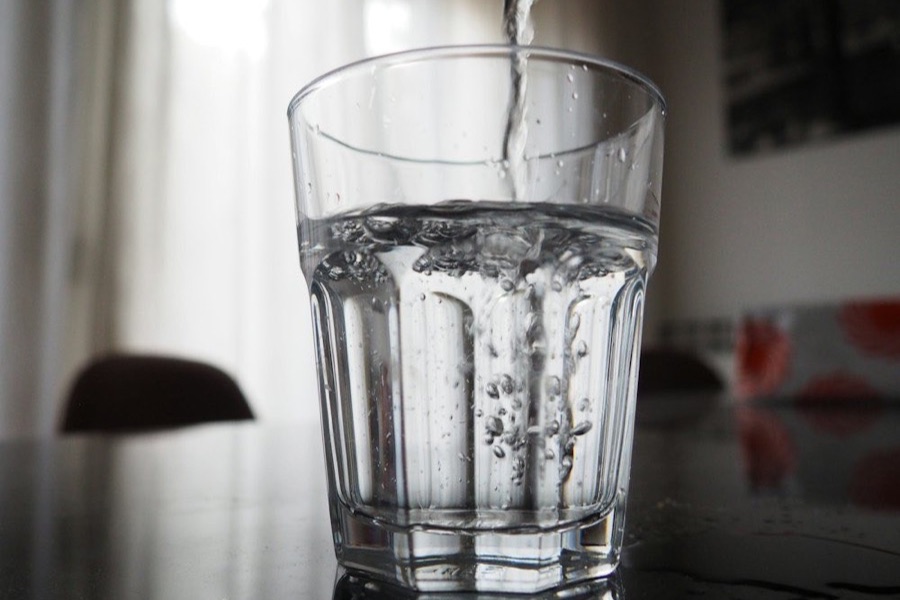
August, and everyone's getting through more water than usual. Jugs in the fridge, bottles refilled from the kitchen tap, ice for the kids' squash. So if you're thinking about a softener, it's natural to wonder what it'll do to the water you drink. The short version: we always keep a separate tap for drinking, and here's why.
How a softener works, in one minute
Most home water softeners use a process called ion exchange. Inside the softener is a tank of tiny resin beads. As hard water flows through, the beads grab the calcium and magnesium (the minerals that cause limescale) and swap them for sodium. Every so often the softener rinses the beads with a strong salt solution from the brine tank to recharge them. That's what the salt is for.
So softened water isn't salty in the way seawater is, and it shouldn't taste salty. But it does contain more sodium than the water that came in.
How much sodium does softening add?
A handy rule of thumb: for every 100 mg/l of hardness (measured as calcium carbonate) that the softener removes, it adds roughly 46 mg/l of sodium. So the harder your water, the more sodium ends up in it once softened.
To put that in context, the UK drinking water standard for sodium is 200 mg/l. That's the figure water suppliers have to meet for the water coming out of your tap. Imagine a home where the water is around 300 mg/l hard. Softening it fully would add something like 138 mg/l of sodium, on top of whatever sodium was already in the supply. Depending on your area, the total can end up close to 200 mg/l, or over it.
That's just an example to show the maths, not a figure for your street. Hardness and sodium vary by area and through the year. Your water supplier publishes both for your postcode, and our postcode checker gives a rough estimate of softened sodium (it's an approximate guide, not official data).
Is it safe to drink, then?
We're not doctors, so we won't make health claims either way. What we can tell you is the practical, sensible approach that's widely followed in the UK: keep at least one tap with unsoftened mains water for drinking and cooking, and use that one for your glass of water, the kettle and anything that goes in a pan.
If you or someone in your home has been told to watch their salt intake for medical reasons, have a word with your GP about softened water. They know your situation and we don't.
Babies and formula
This one's clear-cut. The NHS guidance on making up baby formula says not to use artificially softened water. It recommends freshly boiled drinking water from the tap, and it also says bottled water isn't usually recommended for formula because it can contain too much sodium or sulphate.
So if you've got a baby at home, or one on the way, the hard drinking tap really matters. Boil the kettle using water from that tap and follow the rest of the NHS instructions for making up feeds. We've written more about this in our post on hard water, bath time and formula for new babies.
The hard drinking tap
Every softener we fit comes with a separate kitchen tap that's plumbed in before the softener, so it gives you normal, unsoftened mains water. People usually call it the "hard tap" or "drinking tap". It's normally a neat single-lever tap next to your main kitchen tap, or a three-way tap that does hot, cold and drinking water from one spout.
A few things to know:
- Fill the kettle from it. Yes, you'll still get a bit of scale in the kettle. That's the trade-off for keeping drinking water unsoftened.
- Use it for cooking, especially anything that soaks up a lot of water, like rice, pasta or soup.
- Pets' water bowls can come from it too, if you'd rather keep things simple.
- Everything else is softened: showers, baths, hot taps, the washing machine, the dishwasher and the boiler.
Our installation page explains where it goes and how the rest of the install works.
What about filtered or low-sodium drinking water?
Some people want more than plain mains water at the drinking tap. Two common options:
- Carbon filter: an under-sink cartridge on the drinking tap that can improve taste and smell, for example if you notice chlorine. It doesn't remove hardness or sodium in a meaningful way.
- Reverse osmosis (RO): a system under the sink that pushes water through a very fine membrane, taking out most dissolved minerals, including sodium. It has its own tap and a small storage tank, and it needs regular filter changes. Our servicing page covers RO maintenance too.
Neither is essential. Plenty of people are perfectly happy with plain mains water from the drinking tap.
Why not just use a scale reducer instead?
Some people look at the sodium question and wonder about a scale reducer, which doesn't add sodium. It's a fair question, and the answer depends on what you want from it. We've laid out the pros and cons in water softener or scale reducer.
And if you're mainly interested in how softened water feels on skin, our honest look at soft water and eczema is worth a read.
Quick answers
Can you drink softened water?
Softening adds sodium, roughly 46 mg/l for every 100 mg/l of hardness removed. In hard-water areas the total can get close to or over the UK standard of 200 mg/l, so we fit a separate unsoftened tap for drinking and cooking with every softener.
Can I use softened water for baby formula?
No. NHS guidance says not to use artificially softened water for making up formula. Use freshly boiled water from your unsoftened drinking tap and follow the NHS instructions.
Does softened water taste salty?
It shouldn't. The sodium added is dissolved and most people can't taste it, but it's still there, which is why we keep a separate drinking tap.
Want a hand with your water?
Book a free survey and water test. We'll tell you straight whether a softener's worth it for your home.
Get a free quote